What Is Learning Architecture? (And Why Your L&D Strategy Doesn’t Have One)
Learning architecture in organizations connects strategy, capability, practice, leadership, and measurable results. It answers a tough question: What do people actually need to do, consistently and under pressure, for the organization to hit its priorities?
Traditional L&D usually asks something narrower: What content should people get? That explains why you might see good attendance, high completion rates, and glowing workshop feedback, while behavior stays the same and execution stalls.
Eminent Coaching Academy treats capability as something you design through sequenced learning, real-work application, feedback, and reflection. Leaders interested in seeing if their approach really closes capability gaps can try the complimentary Learning Readiness Session or follow along with the Resolve Newsletter.
The Difference Between Training And Capability Building
Training gives people information or introduces a skill. Capability means they can actually apply that skill when it counts. A solid L&D strategy needs to connect both.
Why Attendance Is Not Evidence Of Learning
Attendance just shows someone was there. Completion means they finished an activity. Neither one proves a manager can give tough feedback, a project team can make good decisions under uncertainty, or employees can use new AI tools without losing their judgment.
You see learning when behavior changes in context. Someone might talk about psychological safety but still shut down dissent in a tense meeting. A leader could pass a project management test and still fail to align stakeholders when priorities clash.
So, evaluation should focus on:
- What behavior needs to change?
- Where will it show up?
- Who will see it?
- What result should get better?
The Cost Of Treating Development As Content Delivery
If development is just content delivery, the learner gets left holding the bag after the event. There’s often no chance to practice, get feedback, adapt the skill, or tie it to real work.
This leads to repeated training requests, weak transfer, managers who keep escalating, and employees who talk about change but can’t lead it. The organization pays for activity, but the capability gap stays open.
The Knowledge Problem Inside Traditional L&D
The real problem isn’t a lack of information. It’s confusing information, belief, and actual performance. Learning architecture bridges the gap between what people can explain and what they can reliably do.
Rationalism And The Limits Of Knowing That
Rationalism puts reason at the center of knowledge. René Descartes is famous for this, valuing logical thought and certainty. In workplace learning, you see it as a tidy presentation, a model, or a policy that spells out what people should know.
Sure, concepts give us shared language and can help with decision-making. But concepts alone don’t show if someone can execute when info is missing, emotions run high, or people disagree.
The issue isn’t reason itself. The issue is thinking reason alone prepares you for performance.
Declarative Knowledge Does Not Ensure Performance
Declarative knowledge covers facts, principles, and descriptions. It lets someone say that effective delegation needs clarity, or that critical thinking means evaluating evidence.
Procedural knowledge is something else. It’s about knowing how to act. A leader with procedural knowledge can clarify ownership, test assumptions, handle pushback, and adjust decisions on the fly.
Here’s a quick test: take away the slide deck and put the learner in a real situation. If they freeze, they probably kept the learning as content, not capability.
Why Gettier’s Challenge Matters In Workplace Learning
Philosophy often defines knowledge as justified true belief. Edmund Gettier challenged that, showing you can have a justified, true belief that still doesn’t feel like real knowledge. For L&D, this matters, a correct answer might come from luck, shaky reasoning, or one-off circumstances.
A learner might pick the right answer in a simulation without really understanding why. A team might hit a milestone through heroic effort, but not have a repeatable process.
The real workplace question is tougher: can people deliver good performance for the right reasons, even as things change? A learning system needs to test that—through application, observation, and reflection. The Internet Encyclopedia of Philosophy’s explanation of Gettier’s problem gives some background if you’re curious.
Experiential Learning As The Missing System
Experiential learning turns knowledge into tested capability. It puts people inside meaningful work, makes their decisions visible, and gives them the feedback they need to improve.
Empiricism And Learning Through Real-World Practice
Empiricism focuses on experience, observation, and evidence. Francis Bacon pushed for careful observation and inductive reasoning, while John Locke said the mind is shaped by experience.
Organizational learning doesn’t mean tossing out theory. It means testing theory in reality. A leadership principle becomes useful when a manager applies it in a real conversation, sees what happens, gets feedback, and tweaks their approach next time.
That’s why experiential learning architecture starts with the work itself. The organization’s current projects, decisions, relationships, and risks form the learning environment.
Procedural Knowledge And Performance Under Pressure
Procedural knowledge grows through purposeful repetition. Learners practice a behavior, get specific feedback, and try again with more complexity.
A new manager might rehearse a performance conversation, have it with an employee, review it with a coach, and prepare for the next one. An AI adoption program could ask employees to use a tool on real work, check the output, spot risks, and tweak the process.
When the pressure’s on, people don’t recall every principle. They lean on patterns, habits, judgment, and practiced responses. Learning architecture helps build those deliberately.
Designing Conditions For Behavioural Change
Behavioral change needs more than motivation. It takes conditions that make the right behavior possible and repeatable.
Usually, those conditions include:
- A clear business outcome
- A specific capability gap
- Real-work practice
- Feedback from credible observers
- Time for reflection and adjustment
- Leaders who reinforce the new standard
- Measures that show if transfer is happening
The designer’s job is to sequence these elements. A workshop might kick things off, but the architecture keeps going—into meetings, projects, coaching, and decisions.
The Eminent Journey From Insight To Impact

The Eminent Journey turns learning architecture into three phases: Discover, Develop, and Deliver. Each one tackles a different failure point between insight and organizational impact.
Discover: Diagnosing The Actual Capability Gap
Discover finds out what’s really happening. It separates a knowledge gap from things like resource problems, unclear roles, broken processes, cultural constraints, or leadership behaviors that block performance.
Diagnosis could involve stakeholder conversations, observation, DISC-informed reflection, project evidence, and reviewing current outcomes. The goal isn’t to label people. It’s to spot what needs to change.
The key question: What does the strategy require people to do, and what’s stopping them from doing it?
Develop: Building Skills Through Application And Feedback
Develop turns the diagnosis into a structured learning journey. People work with real cases, live challenges, peer input, coaching, and deliberate practice.
The design should fit the capability. If the gap is decision-making, learners need to make tough decisions. If it’s influence, they need stakeholder conversations. If it’s AI readiness, they need to work with AI outputs and practice judgment, verification, and escalation.
John C. Maxwell’s leadership work talks about developing people through intentional growth. That really works when development connects to current responsibilities, not when it’s separate.
Deliver: Making Capability Visible In Results And Culture
Deliver is where you see capability in action. It shows up in steadier execution, clearer decisions, better collaboration, healthier challenge, and less dependence on a few people.
Measurement should compare where you started to where you want to be. Evidence might be milestone reliability, decision speed, quality signals, retention, stakeholder feedback, or actual use of new practices.
Culture shifts when new behaviors become normal and expected. Learning architecture makes that visible, instead of just assuming it happened because a program ended.
What A Strong Learning System Includes
A strong learning system isn’t just a course catalog. It’s a connected set of choices about outcomes, experience, practice, leadership, ownership, and evidence.
Strategic Alignment And Clear Outcome Measures
The system starts with strategic intent. A capability objective should link to a business priority—maybe improving delivery reliability, prepping teams for AI, reducing risk, or building leadership capacity.
Measures need to be set before learning starts. They could be better execution, fewer escalations, stronger stakeholder alignment, or more readiness for a role change.
Real-Work Challenges And Deliberate Practice
Learning should tie into work people recognize. Real projects bring complexity that generic examples just can’t match.
Deliberate practice then zooms in on the behaviors that need work. Learners practice tough conversations, decisions, presentations, or analyses, get precise feedback, and repeat the behavior under tougher conditions.
Leadership Coaching, DISC, And Stakeholder Ownership
Executive coaching helps leaders examine their assumptions, patterns, and choices that affect others. DISC can offer a practical lens for communication preferences and behavior under stress, without boxing anyone into a label.
Stakeholder ownership matters too. Co-design brings people affected by a change into the process, making it more relevant and boosting adoption. The best systems are built with the organization, not forced on it.
Measurement Across Execution, Risk, Stability, And AI Readiness
Learning outcomes should tie to the conditions that make or break strategy:
- Execution: Can teams deliver more consistently?
- Risk: Are human-side risks spotted before they become failures?
- Team stability: Are people equipped, engaged, and able to handle pressure?
- AI readiness: Can the workforce meet the quality and judgment standards that AI-enabled work demands?
These measures turn learning into a strategic capability, not just an HR checkbox.
When Organizations Need A Learning Architecture
Organizations need learning architecture when a key priority depends on people acting differently, but the L&D approach stops at information. There are a few moments when the gap really stands out.
AI Adoption That Has Outpaced Workforce Readiness
Rolling out new tech doesn’t mean people are ready for it. Employees might have AI tools but not know how to judge outputs, protect quality, redesign workflows, or make good decisions when the tool’s uncertain.
AI readiness needs new standards of judgment and collaboration. Leaders also need to clarify what good work looks like now.
High Performers Moving Into Leadership
Being technically great doesn’t automatically make someone a good leader. New managers might know their field but struggle with delegation, feedback, conflict, prioritization, and team development.
A learning architecture helps with the transition before avoidable strain hits the manager, the team, and delivery.
Transitions That Are Operationally Planned But Humanly Unprepared
A merger, restructure, new system, or big launch might be well-managed operationally, but people can be left to figure out the change alone.
If teams keep old assumptions, uncertainty turns into a performance risk. Learning architecture sets up the conversations, practice, and support that make new roles and expectations real.
Strategies That Repeatedly Stall At Execution
Repeated execution failure isn’t always about process. Missed milestones, decisions that need escalation, and inconsistent ownership might mean people haven’t built the capability the strategy demands.
Before redesigning another workflow, leaders should ask if the organization has the judgment, communication, leadership, and collaboration to use that workflow well.
Build The Capability Your Strategy Requires

The gap between strategy and execution is usually a capability gap. It closes when leaders find the real constraint, design learning around real work, and measure if behavior changes where results actually matter.
Subscribe To Resolve
Resolve by Eminent Coaching Academy digs into practical thinking for professionals, leaders, and organizations who are in the middle of meaningful transitions. The newsletter comes out twice a week.
It looks at the learning gap, how to design lasting development, and what it really takes to navigate systems and change. There’s a real focus on the impact that’s possible when people build capability on purpose, not just by accident.
Want to keep up? Subscribe to our Resolve Newsletter. The newsletter keeps serving as a steady resource for bridging the gap between where you are and what the moment asks of you.
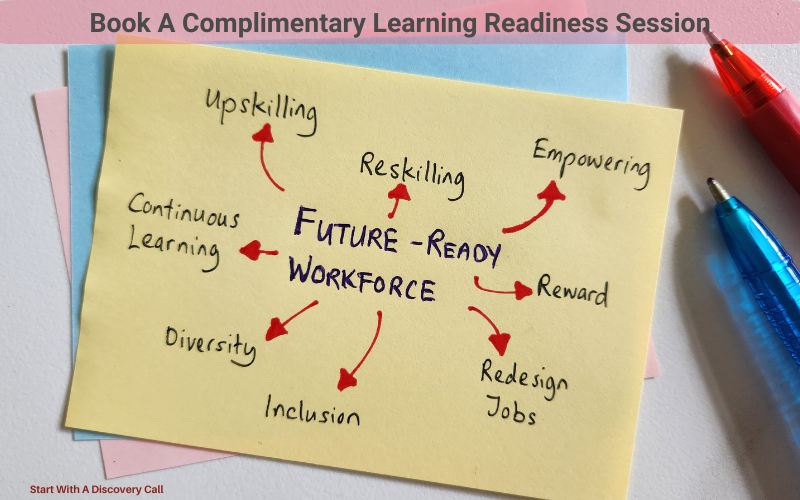
Book A Complimentary Learning Readiness Session
Organizational leaders can book a complimentary 75-minute Learning Readiness Session with Eminent Coaching Academy. In this session, you’ll get a chance to dig into the gap between your strategic needs and your current learning setup.
The conversation aims to spot the most pressing capability issue before anyone suggests a solution. Contact Us to request a session. We close the gap by design, on purpose, and most importantly, together.