How to Build AI Readiness Before Your Results Reveal the Gap
AI has become remarkably capable at declarative knowledge. Many organizations build AI readiness to capture facts, definitions, patterns, summaries, and theoretical explanations. It can retrieve information in seconds, compare thousands of sources, and produce competent first drafts.
That capability is valuable, yet it does not guarantee sound action. Organizations still need people who can interpret context, exercise judgment, build trust, and make responsible decisions when the facts are incomplete.
AI readiness and procedural knowledge are inseparable: technology adoption creates value only when people can apply knowledge reliably in real situations. Eminent Coaching Academy approaches this challenge through experiential learning architecture, combining project discipline with human-centred capability development.
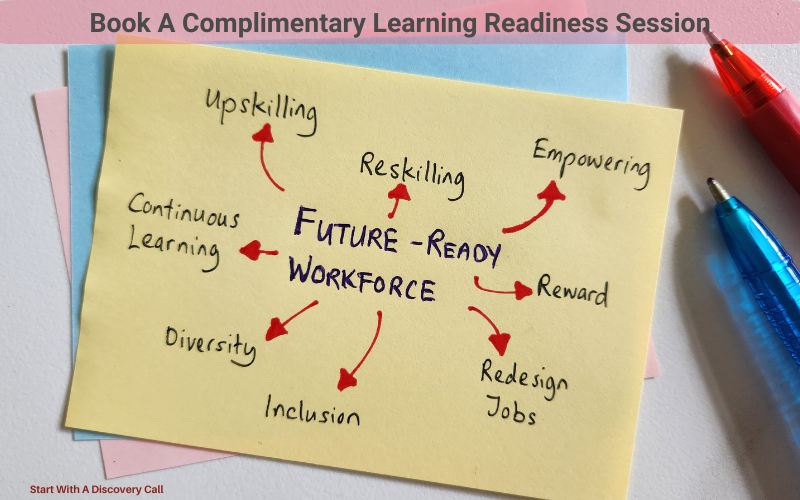
Leaders can begin by assessing what their people must be able to do under pressure, not merely what they must know. A complimentary 75-minute Learning Readiness Session can help organisational leaders identify that gap before it becomes an execution problem.
The Difference Between Knowing and Doing
AI can make information available at unprecedented speed. Organisational readiness depends on whether people can convert that information into responsible, effective action.
Declarative Knowledge in an AI-Augmented Workplace
Declarative knowledge is knowledge about something. It includes facts, concepts, theories, policies, definitions, and explanations. A professional may know the principles of project governance, emotional intelligence, cybersecurity, or change management without consistently applying them.
AI systems are particularly strong at this layer. They can retrieve policy language, explain a framework, draft a risk register, or summarise research. This resembles the rationalist tradition in epistemology, where reason and structured thought are treated as important routes to knowledge.
The limitation is not that declarative knowledge lacks value. It is that information does not automatically become judgment. A manager may know that psychological safety matters and still shut down dissent during a tense meeting.
Procedural Knowledge as Applied Capability
Procedural knowledge is knowledge of how to do something. It develops through practice, feedback, observation, repetition, and reflection. It is visible in action: facilitating a difficult conversation, prioritising competing risks, adapting a plan, or making a decision with incomplete information.
A professional can describe how to ride a bicycle without being able to ride one. The same distinction appears at work. Knowing a conflict-resolution model is different from using it when two senior stakeholders are openly distrustful.
Procedural knowledge is central to AI readiness because AI changes workflows, standards, and decision speeds. People need opportunities to practise working with new tools while preserving quality, accountability, and human judgment.
Why Facts Alone Do Not Produce Better Decisions
Facts become useful when someone can evaluate their relevance, test their reliability, and connect them to a specific context. Decision quality depends on more than retrieval. It requires interpretation, trade-offs, timing, ethical reasoning, and awareness of consequences.
Research on expertise, including work associated with Daniel Kahneman and Gary Klein, shows that judgment is shaped by both analytical reasoning and experience. Experience does not make every decision correct, yet structured practice helps people recognise patterns and respond deliberately rather than reflexively.
That is why a training module can be completed while capability remains unchanged. The missing ingredient is often procedural learning tied to real work.

Where Technology Adoption Breaks Down
Technology projects often receive detailed implementation plans, governance structures, and performance targets. The human learning required to operate differently is frequently treated as a communication task rather than an architecture problem.
The Gap Between Tool Deployment and Workforce Readiness
A new AI tool may be deployed successfully while workforce readiness remains low. Employees may know where to access the tool, yet remain unclear about acceptable use, quality standards, escalation points, data boundaries, or how their roles have changed.
The World Economic Forum’s Future of Jobs Report 2025 identifies analytical thinking, resilience, flexibility, leadership, and social influence among important workforce capabilities. These are not acquired simply because an organisation purchases software.
Technology adoption without capability adoption creates a misleading success signal. The system is live, usage data looks promising, and people are still producing inconsistent work.
Judgment, Context, and Accountability Under Pressure
AI can generate options, identify patterns, and accelerate analysis. It does not carry organisational accountability in the human sense. People remain responsible for deciding whether an output is appropriate, fair, safe, and aligned with the organisation’s purpose.
That responsibility becomes more demanding when conditions are ambiguous. An AI-generated recommendation may be technically plausible while ignoring a stakeholder’s history, a community’s concern, or a risk hidden in an exception.
Procedural knowledge helps people ask better questions before acting. It also gives them the confidence to challenge an output when the context does not support it.
The Human Costs of Unprepared Change
When people are not prepared for a transition, the costs appear in familiar ways: duplicated work, defensive behaviour, quiet workarounds, avoidable escalations, and capable employees leaving because expectations keep shifting without support.
Change fatigue is not always resistance to technology. It may be a rational response to unclear standards and insufficient practice. Employees need to know what good work looks like now, how they will learn it, and where they can safely test new approaches.

The Capabilities AI Cannot Replace
The most valuable human capabilities are not mysterious qualities. They are observable behaviours that can be developed through intentional practice and feedback.
Critical Thinking and Discernment
Critical thinking is more than asking whether an AI response is accurate. It involves framing the right question, identifying assumptions, testing evidence, comparing alternatives, and recognising when a technically correct answer is unsuitable for the situation.
Discernment adds judgment about what matters. A leader must decide which risk deserves attention, which signal is meaningful, and which action is proportionate. These decisions require context and responsibility, not only computational speed.
Organisations can build this capability through scenario work, red-team reviews, decision journals, and facilitated reflection on real cases.
Emotional Intelligence and Relational Trust
Trust affects whether people disclose concerns, challenge weak assumptions, and adopt new ways of working. Emotional intelligence allows leaders to notice tension, regulate their response, listen accurately, and adapt communication without losing clarity.
AI can imitate empathetic language. It does not share accountability for a relationship or repair trust after a poor decision. People do that work.
Daniel Goleman’s research on emotional intelligence helped establish why self-awareness, self-management, empathy, and social skill matter in leadership. In practice, these capabilities are developed through feedback, coaching, observation, and repeated conversations where the stakes are real.
Adaptive Execution in Ambiguous Conditions
Adaptive execution means moving work forward while conditions change. It includes prioritising, communicating trade-offs, learning from evidence, and revising a plan without creating confusion.
This capability matters because AI-augmented work often accelerates change rather than reducing it. Teams may receive more options, more data, and more output than they can immediately evaluate.
The practical test is simple: can people apply knowledge when the plan is incomplete? If not, the organisation has a learning gap, regardless of how sophisticated its tools may be.
Learning Architecture for Lasting Capability
Learning architecture connects strategic intent to the behaviours, practice environments, reinforcement, and measures required for lasting change. It replaces isolated training events with a designed journey.
Diagnose Before You Design
A useful diagnosis begins with the work, not the programme catalogue. Leaders should identify the moments where performance breaks down, the decisions that create risk, and the capabilities the transition now requires.
A learning readiness assessment can examine:
- What people must be able to do differently
- Where current performance becomes inconsistent
- Which stakeholders experience the consequences
- What procedural knowledge is missing
- How AI changes standards, roles, and decisions
The wrong solution delivered competently remains the wrong solution. Diagnosis protects the organisation from investing in content that does not address the actual constraint.
Build Learning Around Real Work
People build procedural knowledge by working on meaningful problems. Learning should therefore include live projects, realistic simulations, peer feedback, coaching, and structured reflection.
A cohort might examine an active implementation, practise an escalation conversation, test an AI-supported workflow, or review a decision that produced an unexpected result. The learning is not separate from delivery. Delivery becomes the learning environment.
This approach also increases relevance. Participants can see why the capability matters, apply it immediately, and receive feedback before weak habits become embedded.
Measure Behavioural Change, Not Attendance
Attendance is an activity measure. It does not show whether capability improved.
Stronger measures examine behaviour and outcomes: decision cycle time, escalation quality, stakeholder confidence, rework, adoption patterns, retention signals, and the consistency of execution. Baseline data should be established before learning begins, with follow-up observations at defined intervals.
The aim is not to claim that every result comes from learning. The aim is to establish whether the designed experience contributed to the change the organisation needed.

The Eminent Journey From Insight to Impact
Eminent Coaching Academy’s Eminent Journey provides a practical sequence for moving from awareness to capability and visible performance. Its three phases are Discover, Develop, and Deliver.
Discover: Surface the Real Capability Gap
Discovery creates the clarity required for useful action. It examines the difference between current behaviour and the standard the moment demands.
This may include self-assessment, stakeholder interviews, DISC-informed reflection, workflow observation, and review of project evidence. The aim is not to label people. It is to identify the conditions, habits, assumptions, and missing capabilities affecting execution.
For AI readiness, discovery should also ask where people rely on outputs without sufficient scrutiny, where new tools are being avoided, and where accountability is unclear.
Develop: Practise the Skills the Moment Requires
Development turns insight into applied capability. Participants practise the conversations, decisions, behaviours, and workflows they will need in their actual roles.
The sequence may include short teaching inputs, realistic cases, peer learning, coaching, guided experiments, and feedback. Practice should increase in complexity, moving from low-risk rehearsal to situations that resemble the pressure of live work.
This is where declarative knowledge becomes procedural knowledge. People do not merely learn what critical thinking or adaptive leadership means. They practise doing it.
Deliver: Turn Learning Into Visible Results
Delivery makes capability observable. Leaders use the new skills in projects, meetings, decisions, and stakeholder relationships, while the organisation tracks relevant indicators.
The work continues through reflection and adjustment. Participants identify what changed, what remains difficult, and what support is needed to sustain performance.
The Eminent Journey is not a linear promise that every transition will be easy. It is a disciplined way to ensure that insight leads to practice, and practice leads to results.
Start Building Readiness Before the Gap Widens
AI readiness is not a future project reserved for technology teams. It is an organisational capability question that affects every role touched by new tools, new standards, or faster decisions.
Questions Leaders Should Ask Now
Leaders can start with questions that expose the difference between deployment and readiness:
- What must employees be able to do differently because of AI?
- Which decisions still require human judgment and accountability?
- Where could an incorrect or unchallenged output create material risk?
- Which teams have practised the new workflows under realistic conditions?
- How will managers reinforce procedural knowledge after formal learning ends?
- What evidence will show that behaviour and execution have changed?
These questions move the conversation from adoption statistics to organisational performance.
A Practical First Step for Organisations
A focused Learning Readiness Session gives leaders a structured way to identify the highest-impact capability gap before commissioning a programme. The assessment should connect strategy, work realities, human behaviour, and measurable outcomes.
Eminent Coaching Academy offers a complimentary 75-minute Learning Readiness Session for organizational leaders.
Leaders can also subscribe to the Resolve Newsletter for experiential insight on closing the gap between current capability and what high-stakes moments require.